Tibetan Medicine
The three constitutions in Tibetan medicine: Wind, Bile and Phlegm
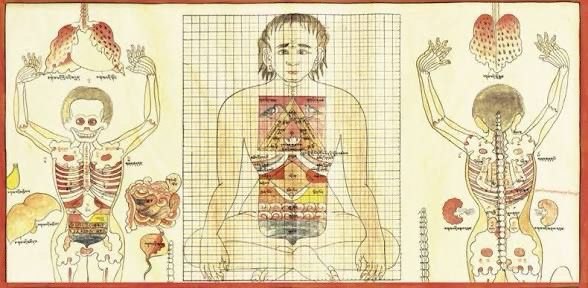
In Tibetan medicine, health is understood through the balance of three vital principles: Wind, Bile and Phlegm.
In Detail
Article
In Tibetan medicine, a human being is seen as a whole system in which the body, mind, emotions, diet and lifestyle constantly influence one another. One of the central principles of this system is the teaching of three constitutional types: Wind, Bile and Phlegm.
These three principles are also called vital foundations. When they are in balance, a person feels stable, has enough energy, digests food well, thinks clearly and adapts more easily to daily changes. When the balance is disturbed, certain tendencies and health problems may appear.
Phlegm is connected with metabolism, immunity, hormonal regulation, joints, the lymphatic system, mucous membranes, body fluids and fatty tissues. People with this constitution are often calmer, steadier and more grounded, but may be prone to heaviness, weight gain and stagnation.
Bile is connected with heat, energy metabolism, the liver, pancreas, gallbladder and bile ducts. People with a dominant Bile constitution are often active, decisive, energetic and focused, but may also be prone to irritability, overheating and sensitivity to spicy, heavy or excessive food.
Wind is connected with the nervous system, mental activity, movement, sensitivity, breathing and communication between organs and tissues. People with a Wind constitution are often mobile, emotional, creative and impressionable, but they may tire more quickly and react strongly to stress, lack of sleep and irregular routines.
Tibetan medicine also speaks about “hot” and “cold” disorders. Bile is more often associated with heat, Phlegm with cold and stagnation, while Wind can intensify both hot and cold patterns.
It is important to understand that pure constitutional types are not very common. Most people have mixed constitutions, such as Phlegm–Bile, Bile–Wind, Wind–Phlegm and other combinations. This is why general advice is not always enough. It is important to understand which principle dominates and what has caused the imbalance.
Diet in Tibetan medicine is never random. It is chosen according to constitution, season, lifestyle, emotional state and the nature of the disorder. Proper nutrition is considered a gentle but important way to bring the body back to dynamic balance.
Medicin Master
Would you like to understand how this relates to your situation?
An article can help you orient yourself, but a personal situation is better discussed in a live conversation. Write to Giedrius if you would like to talk through your question calmly and specifically.